

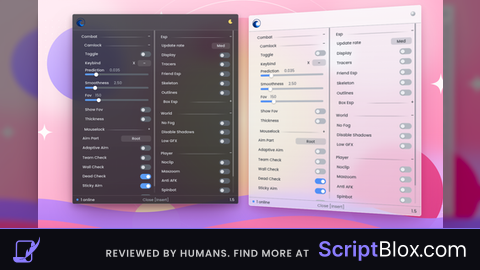
KeylessUniversal
--print(("\n"):rep(100))
--^ string library functions

local gmatch, sub, gsub, format, char, byte = string.gmatch, string.sub, string.gsub, string.format, string.char, string.byte
local uchar, ucode, upattern = utf8.char, utf8.codepoint, utf8.charpattern

local tostring, tonumber = tostring, tonumber
local tinsert = table.insert

local floor, clamp, random = math.floor, math.clamp, math.random
local bit32_bxor = bit32.bxor

local LuaEscapeCodes = {
    ["b"] = "\b",
    ["n"] = "\n",
    ["r"] = "\r",
    ["t"] = "\t",
    ["f"] = "\f",
    ["v"] = "\v",
    ["\""] = "\"",
    ["'"] = "\'",
    ["\\"] = "\\",
}

local Quotes = {
    ['"'] = "'",
    ["'"] = "\""
}

local function ParseStrings(File, ByteLength)
    local function ParseString(String) -- Formats the \u{...}, \f, \b, ...
        String = gsub(String, "\\(.)", function(Character)
            return LuaEscapeCodes[Character]
        end)
        String = gsub(String, "\\u{([0-9A-Fa-f]+)}", function(Hex)
            return uchar(tonumber(Hex, 16))
        end)

        return String
    end

    local Crypt = {
        Encoded = {}, -- Dictionary
        Used = {}, -- Array
        CharLen = ByteLength or random(4, 7) -- Byte length
    };

    function Crypt:GenerateKey(len)
        len = len or 64

        local key = "";
        local hex = {"a", "b", "c", "d", "e", "f", "1", "2", "3", "4", "5", "6", "7", "8", "9", "0"}

        for _ = 1, len do
            key = key .. hex[random(1, #hex)]
        end

        return key
    end

    function Crypt:Encode(String, Quote)
        local Encoded = ""

        String = gsub(String, Quote, "\\" .. Quote)
        String = ParseString(String)

        for Char in gmatch(String, upattern) do
            local Generated = Crypt:GenerateKey(Crypt.CharLen) .. Crypt:GenerateKey(Crypt.CharLen)

            Crypt.Encoded[Char] = Crypt.Encoded[Char] or Generated

            Encoded = Encoded .. (Crypt.Encoded[Char])
        end

        return Encoded
    end

    function Crypt:GetList()
        local List = Crypt.Encoded;
        local String = "{\n"

        for Char, Value in next, List do
            Value = gsub(Value, "'", "\\'")

            String = String .. format("\t\t['%s'] = uchar(0x%02x);\n", Value, ucode(Char))
        end

        return String .. "\t}"
    end

    Crypt.FunctionCode = [[do ({})[1] = "ENCODED VIA STRING ENCODER V2.0, Please do not remove these credits." end
local uchar = utf8.char

local function %s(String)
    local A = String:gsub("%s", %s)
    return A;
end
]]

    Crypt.FunctionName = "_" .. Crypt:GenerateKey(8);

    --& Important Variables

    local Pattern = "%s([^%s]*)%s" -- %s is quote

    for N, Quote in next, Quotes do
        --local QuotePattern = format(Pattern, Opposing, Quote, Quote, Opposing, Quote)
        local QuotePattern = format(Pattern, Quote, Quote, Quote)
        local NQuotePattern = format(Pattern, N, N, N)

        local function Inner(String)
            if String == "" then
                return
            end

            String = gsub(String, NQuotePattern, function(String2)
                return N .. String2 .. N
            end)

            return format("%s([[%s]])", Crypt.FunctionName, Crypt:Encode(String, Quote))
        end

        File = gsub(File, QuotePattern, Inner)
    end

    return format(Crypt.FunctionCode, Crypt.FunctionName, string.rep(".", Crypt.CharLen * 2), Crypt:GetList()) .. File
end

local Code2 = ParseStrings('print("Hello World!")', 4)
print(Code2)![[KEYLESS] Moondiety Script | 17+ supported Games](https://scriptblox.com/images/sb/0-1753093706828.png)

ty
Hey 👋! Where do I put it 😁
@SimpleScripter Read the usage, put the example usage script under the script
Pretty good works well
ud
chatgpt: dont worry i gotchu the string is "Hello World!"
@ReactorCoreDev it's not supposed to be 100% chatgpt proof, it's designed to to encode strings and make it harder to understand at first glance
@4774 bud he didn't say it was gpt he said its easy to decode lmao
@helloworld39429 the point is to encode strings, to hide them from constant dumps & deobfuscations, not read the code.